Plantar fasciitis is a painful foot condition that can limit your movement. The severity of the disease varies between individuals. Reports show that about 10 percent of the global population suffers from plantar fasciitis. Most of the patients are adults aging 25 to 65 years. It is the most common cause of heel pain.
What Is Plantar Fasciitis?
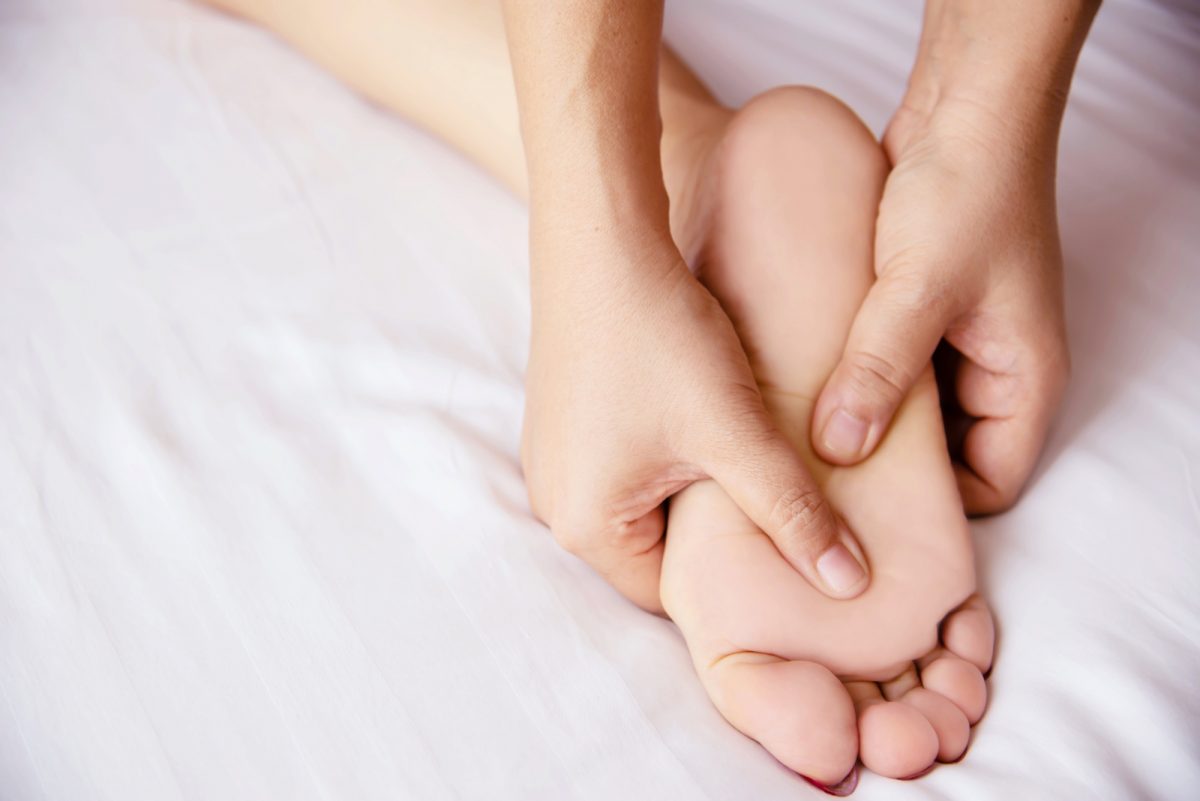
It arises because of inflammation of the plantar fascia. The plantar fascia is a fibrous, ligament-like soft tissue present in the bottom of your foot. It extends from the bottom of the heel to the toes. Overuse and too much stretching can irritate it, leading to swelling.
The swelling brings a lot of pain and stiffness which makes walking unbearable.
Athletes and players are more prone to developing plantar fasciitis due to excessive activities with the foot.
Symptoms Of Plantar Fasciitis
Painful arch of the foot
Heel pain (especially the bottom of the heel)
Foot stiffness
Swelling and color change around the heel
Sometimes, patients also report stiffness of the Achilles tendon.
How Can You Treat Plantar Fasciitis?
The disease can be managed well with simple at-home strategies. However, it may take time to heal. As the heel is crucial in weight-bearing of the body, ample rest is not possible for many. To relieve your symptoms you can try the following:
Medicines
Over-the-counter painkillers are good at alleviating pain and reducing inflammation. Drugs like ibuprofen, naproxen, etc are good at providing relief.
RICE Principle
The best way to manage plantar fasciitis at home is to follow RICE i.e., ample Rest, Ice application, slight Compression and Elevation of the foot. These maneuvers help reduce the inflammation of the plantar fascia and consequently alleviate symptoms.
According to a study, rest, and medicinal therapy (localized steroid injections for severe cases) are good for treating plantar fasciitis pain.
Orthotics
You can get custom-designed orthotics for the long-term management of plantar fasciitis. Specially designed orthotics not only provide pain relief but also prevent recurrence of the disease.
Chiropractic Treatment
Manipulative therapy and chiropractic treatment can play a positive role in the alleviation of plantar pain. Clinical studies highlight the importance of orthotics and chiropractic therapy in plantar fasciitis treatment. Non-invasive procedures like extremity manipulation can effectively rid you of plantar fasciitis symptoms.
Early introduction of extracorporeal shockwave therapy has also shown promising results. Surgery is reserved for extreme cases only.
Plantar Fasciitis Treatment At The Legacy Clinic Of Chiropractic
If putting weight on the foot forces you to do salsa, your plantar fascia needs help!
With proper and early treatment, you can save precious (healing) time and save yourself from agony. To relieve your heel pain, visit the Legacy Clinic of Chiropractic for the best, custom-tailored plantar fasciitis treatment!
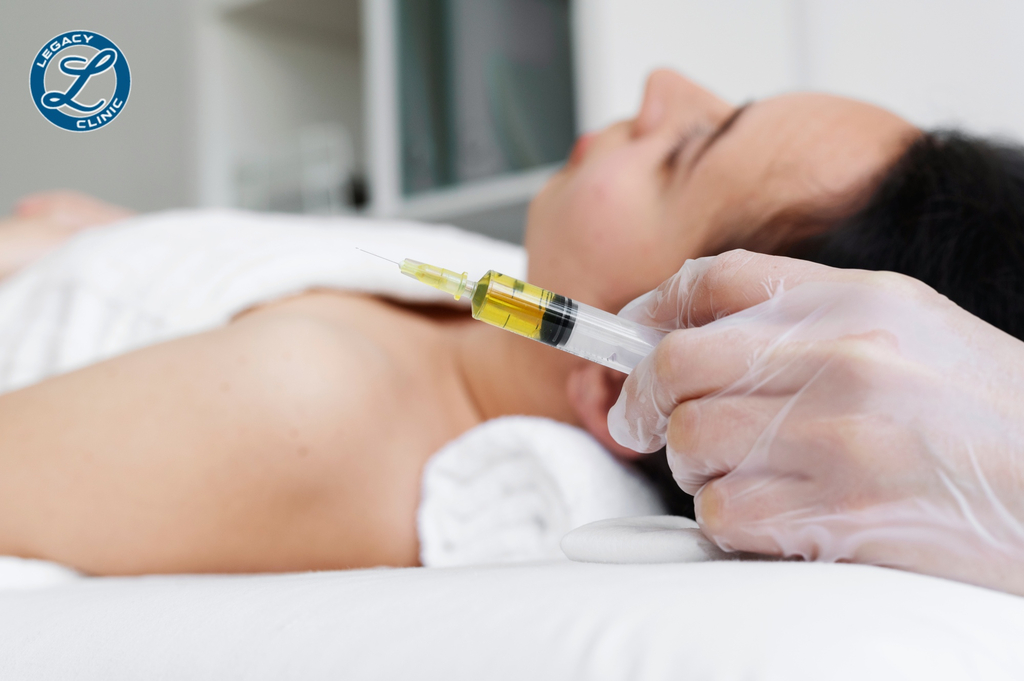
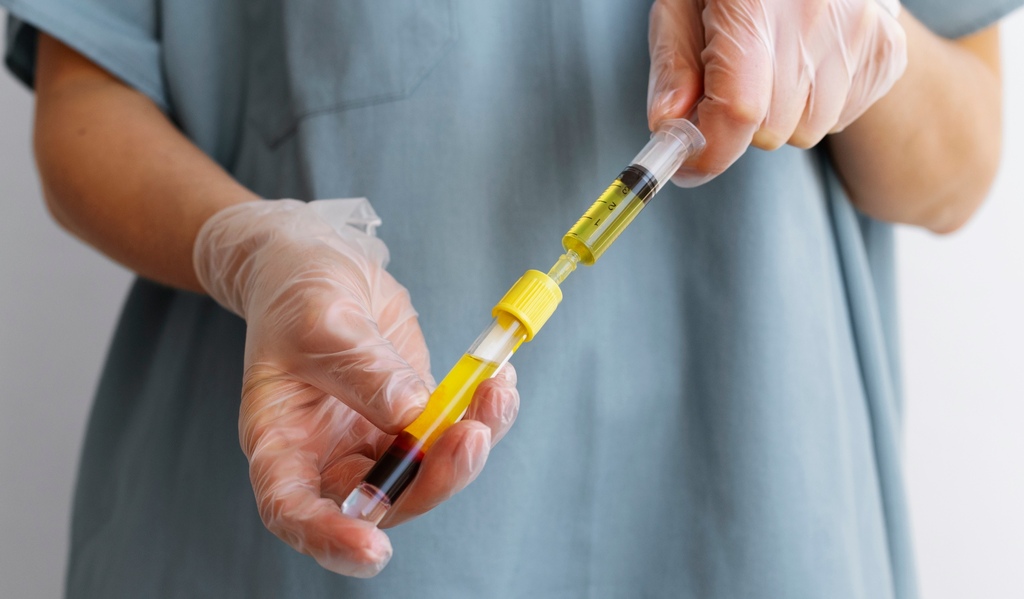
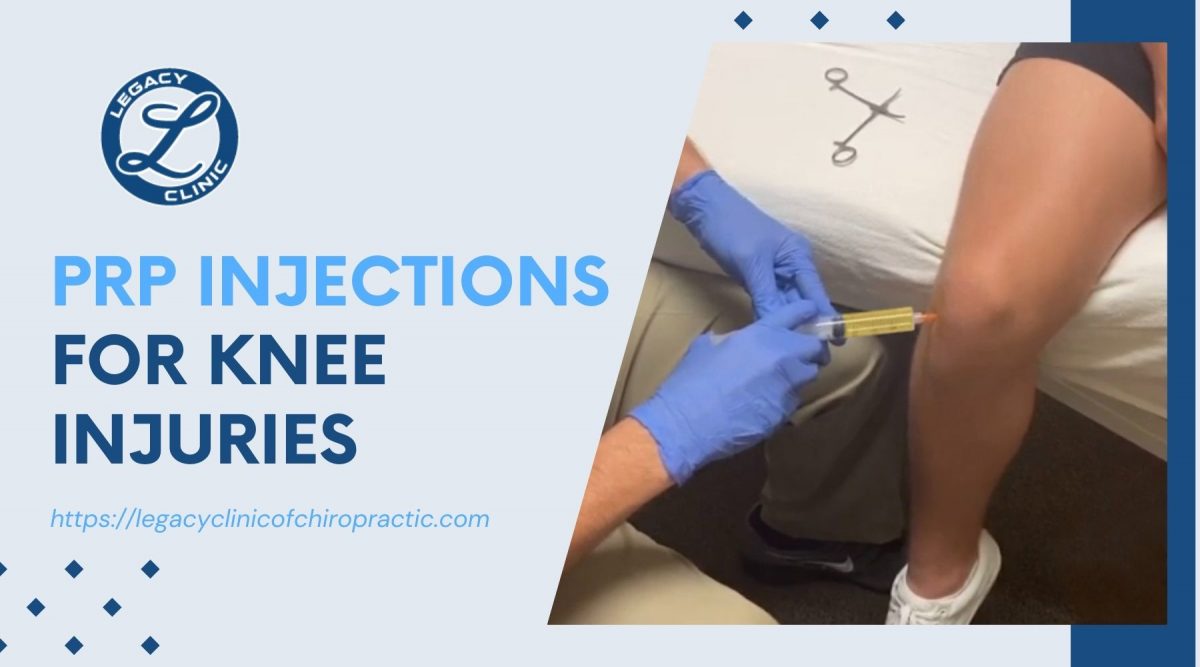
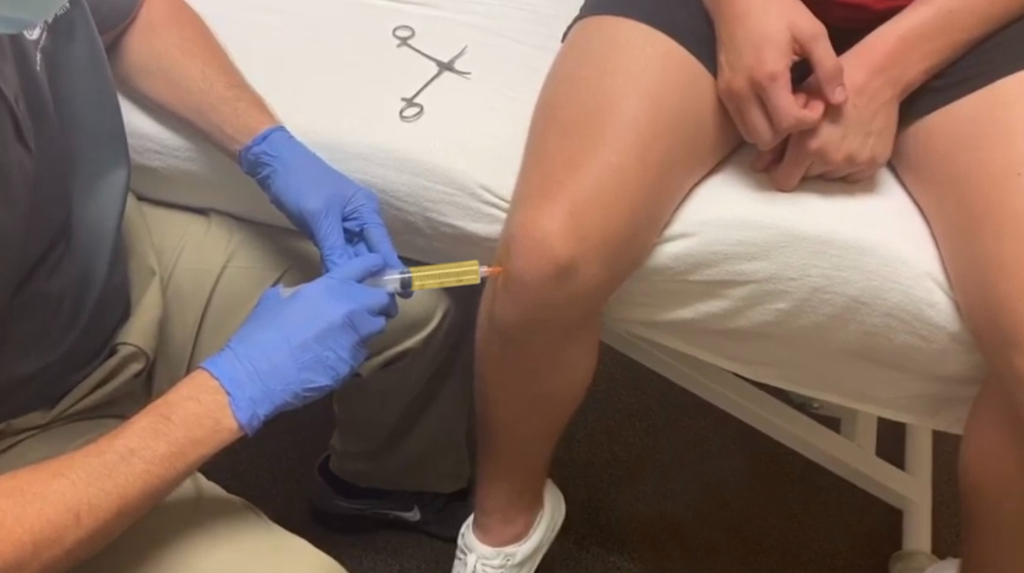
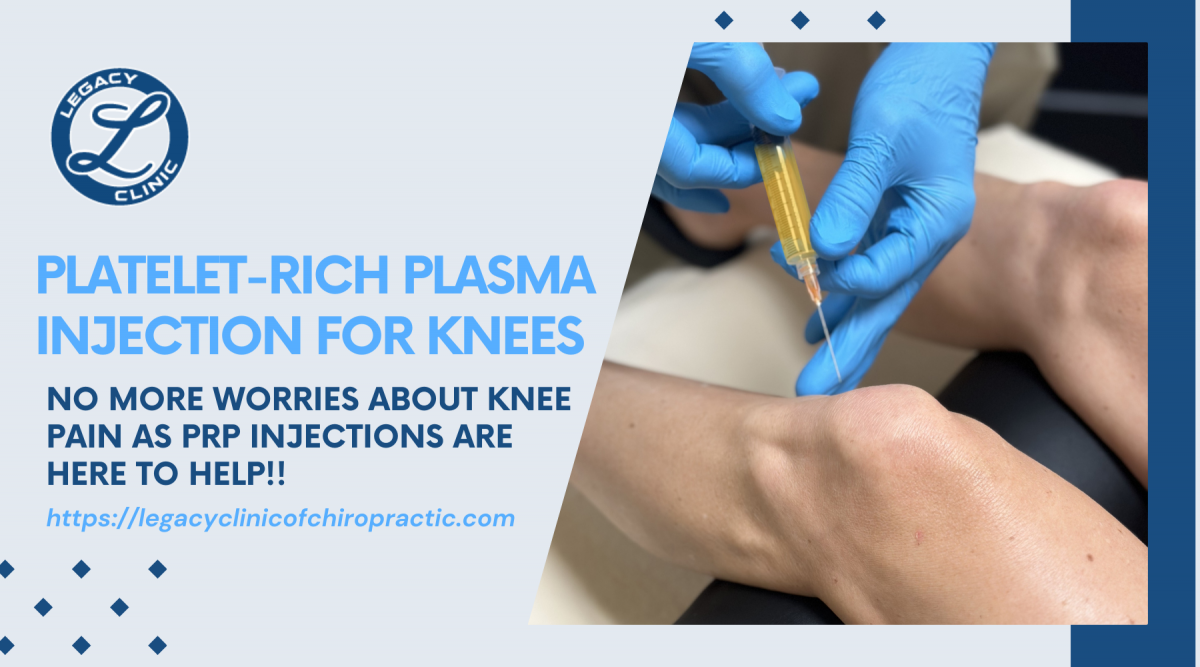
After research & studies on platelet-rich plasma (PRP) injections have been used widely in chiropractic treatment for decades. In the field of sports and orthopedics, platelet-rich plasma therapy is used for treating knee injuries. It is an alternative to all those painful procedures. But after getting a platelet-rich plasma injection, how much time does the knee take for recovery? Let us find out in this blog.
Why PRP Injections for Knee Injuries?
Platelet-rich plasma therapy is very beneficial for curing knee injuries whether due to sports, accidents, or degenerative conditions like osteoarthritis. Some of the key benefits of PRP injections given under proper chiropractic care are as follows:
Enhanced healing
Reduced pain & inflammation
Minimized risk of infection
What Can A Patient Expect To Recover From Knee Injury After PRP Therapy?
Immediate Aftercare
As one is done with platelet-rich plasma injection under chiropractic treatment, he or she might feel discomfort or dizziness at some times at the injection site. But there is no need to worry as this discomfort is generally mild and temporary. It does not last for that long. Hence, immediately after platelet-rich plasma injection, the patient is suggested to give proper rest to the knee and not indulge in any strenuous physical activities for some time, until he or she feels better to move freely.
First Few Days
After the PRP therapy, there are chances of mild swelling and pain in the knee in the starting days. But again there is not any need to worry. It is just the natural healing process of your knee where platelets have come into action. You can go to a chiropractic care center to ask if your current condition allows you to intake pain medications. Consume them only and only if your chiropractor says yes. Generally, the professionals suggest taking acetaminophen to help manage discomfort. But ensure that you do not consume any nonsteroidal anti-inflammatory drugs (NSAIDs). These can have worse effects on the healing process of your knee.
Week 1-2
After 1-2 weeks of platelet-rich plasma injection, patients can do light activities. They can include walking or stationary cycling. But there should not be any physical activity that puts pressure on your knee joint. Otherwise, it would not heal in time.
Weeks 3-4
Generally, during the third and the fourth week, most of the patients start getting fine. Their pain gets reduced and their knee condition also starts improving. And that’s a very good sign! Your PRP therapy has caused its effect. At this point, professionals perform physical therapy of the patients under proper chiropractic treatment to strengthen the muscles around the knee, improve flexibility, and enhance overall joint stability. During this period, the main focus is on slowly increasing the intensity of exercise while avoiding those physical activities that put too much pressure on the injected area. Remember till 3rd and 4th week too, you are not allowed to perform any activity that fosters imbalance and stress over your knee.
Month 2
Within two months of the platelet-rich plasma injection, significant improvements are seen. During this period, the patients can try doing their regular physical activities and other exercises that they used to perform when there was not any knee injury. But again, no heavy lifting, no heavy physical activities!! Do moderate exercises. Do not push the knee to perform them, just go with the flow!
Months 3-6
In the next months, there will be more improvements in terms of pain and functionality. However the exact timeline depends on how severely your knee has been injured initially, your overall physical health, and how well you have followed the protocols. By 5-6 months, most of the critical knee injuries get healed and patients return to their normal routine.
Factors That Influence Recovery Time
Although the above guide is a general overview of how much time the knee generally takes to heal after platelet-rich plasma therapy, there are lots of factors that can affect your overall recovery time. These are:
Severity of Injury
If your knee has been injured very badly because of a heavy accident, there are chances that it will not heal within 6 months, indeed it would take around 8-9 months or even more. But if it is a mind injury, you can expect the recovery time to be around 5-6 months (in general).
Patient Age & Health
Age plays a crucial factor in determining the recovery time of the knee treated with platelet-rich plasma injection under chiropractic care. Generally, the immune system of young people is better than the old ones. Hence, there are chances that younger generations will heal quicker than the older ones. Plus, health is also a major concern here. If an old person who has a knee injury takes a balanced and nutritious diet after platelet-rich plasma therapy, he or she can recover at a rapid rate.
Adherence to Rehabilitation
After PRP therapy, the chiropractic treatment expert prescribes physical therapy and aftercare instructions. If one follows them well, recovery time will be shortened.
Number of Injections
Depending on the severity of the knee condition and the immune system of the patient, he or she might require multiple PRP injections, resulting in a long recovery time.
Additional Tips for Optimising Recovery
To shorten the recovery time & maximize the benefits obtained from PRP therapy, you can consider the following tips:
Follow Medical Advice
Do not be your doctor. Follow the post-procedure instructions provided under a proper chiropractic treatment.
Engage in Physical Therapy
Try to move and be involved in physical mobilities step-by-step daily. Do not just stay idle for the whole recovery time.
Maintain a Healthy Diet
Take proper nutrition to quicken the healing process.
Avoid Smoking and Alcohol
Stay away from any inflammatory substances and drugs.
Stay Positive & Patient
Recovery takes time and you need to be aware of the same. Do not hurry! Maintain a positive attitude and stay aligned with the prescribed procedures.
A healthy you will build a happy you, both physically and mentally!
If you are looking for an expert chiropractor in “The Villages”, Legacy Clinic can help you with the best expertise in platelet-rich plasma injections in “The Villages.”
It is important to understand the recovery duration of PRP injections for knee problems. However, if you are facing shoulder-related issues, PRP therapy can be beneficial. PRP injections promote healing and reduce inflammation in affected areas of the shoulder.
To learn more about how PRP injections can benefit shoulder injuries, visit our detailed guide PRP Injection For Shoulder.
Shoulder pain can seriously affect your life quality. With shoulder pain, lifting objects, swinging arms, playing games, and even lifting your arms become loathsome. Numerous pathologies of the shoulder can take away your agility and peace.
Most people visit an orthopedic surgeon to get them out of pain. Unfortunately, most professionals offer surgical intervention as the only treatment option. However, highly effective modern medicines are bridging the gap between medicinal and surgical approaches. Now, you can get an array of efficient medicines injected directly into the shoulder. The localized effect of these medicines is magical and can even serve as an alternative to surgery.
The Role Of Platelet-Rich Plasma In Shoulder Pathologies
Platelets extracted from your blood have immense therapeutic potential. Nowadays, many people undergo PRP injections for different shoulder disorders. It is a wise decision because PRP for shoulders has the following benefits:
Speeds Up Healing
PRP, injected directly into the shoulder, increases the healing rate after an injury/trauma. Research shows that PRP injections work wonderfully in speeding up healing in soft-tissue injuries and pathologies. It also revamps the body’s regenerative potential.
Alleviates Pain And Inflammation
Platelet-rich plasma brings down inflammation and consequently alleviates pain. Numerous patients with chronic shoulder pain have reported significant improvement (check out the story by clicking here) in shoulder pain and mobility. According to a meta-analysis, a PRP injection can reduce rates of surgery in rotator cuff injury patients.
Reduces Drug-Dependence
Chronic shoulder pain patients frequently suffer from gastric upset induced by the excessive painkillers they take. PRP brings quick, noticeable, and long-lasting improvements in symptoms. This reduces your dependence on medicinal drugs and has no side effects.
PRP Injections At The Legacy Clinic
The Legacy Clinic of Chiropracticoffers platelet-rich plasma injection for shoulder pain under the supervision of experienced professionals. So, don’t let shoulder pain destroy your peace, and visit ASAP!
Iliotibial band syndrome (ITBS) is a painful condition experienced by athletes and players across the globe. The disorder causes a sharp ache in the knee and hip region (on the outside), mainly due to a tight Iliotibial band. The disease’s incidence is between 1.6 and 12% in runners and repetitive motion athletes. Women are more prone to developing ITBS. If you have been put down by lateral knee pain and want to get up ASAP, read us out!
What Is The Iliotibial Band?
The iliotibial band is a tendon present on the outside of the leg. On one end it attaches at the top of your pelvic bone and the other to your knee. Repetitive motion and friction of the tendon can lead to irritation and swelling of the tendon band, leading to excruciating lateral knee pain.
Who Gets Iliotibial Band Syndrome?
As repetitive leg motions can trigger the syndrome, the following people are at the greatest risk of developing ITBS:
Runners
Cyclists
Tennis players
Soccer players
Skiers
Basketball players
Hockey players
Weight lifters
Knee arthritis patients, individuals having weak leg and buttock muscles (gluteus maximus and minimus, etc.), and runners with poor biomechanics are more prone to falling prey to ITBS.
What Are The Symptoms Of Iliotibial Band Syndrome?
The following symptoms are most commonly seen in ITBS patients:
Pain on the outside of the knee (increases with activity).
Burning sensation in the thigh and knee region.
Clicking and rubbing feeling on the outer knee.
How Can I Manage Iliotibial Band Syndrome?
Timely treatment of ITBS is crucial as delayed treatment can lead to scarring in the bursa. The bursa is a fluid-filled sac that acts as a cushion between the IT band and bone. The following modalities have shown promising results in the treatment of ITBS:
Chiropractic Care
Chiropractic treatment is an immensely beneficial, conservative, and effective modality to get rid of your ITBS pain. A chiropractor reduces your pain while speeding up the recovery process. With regular visits to the chiropractor, you can improve your range of motion and prevent ITBS from developing again. Studies show a high efficacy and effectiveness of chiropractic adjustment in ITBS.
Laser Therapy
Low-level laser therapy provides rapid relief in acute iliotibial band syndrome patients. This treatment type has been in use for more than two decades.
Ultrasound
Ultrasound therapy, when paired with physical therapy and cold application leads to significant alleviation of pain and other ITBS symptoms.
Soft Tissue Techniques
Soft tissue manipulation is employed to release muscle tension. A specialized technique i.e., the Graston technique uses specialized instruments to massage the painful iliotibial tendon. It effectively breaks down scar tissue, reduces pain, and improves mobility.
ITBS Relief At The Legacy Clinic Of Chiropractic
At Legacy Clinic, we specialize in reducing IT band pain using the above-mentioned treatment modalities. By providing the proper exercises and stretching guidelines, we help alleviate the pain and reduce long-term issues associated with the disorder. So, with help from the Legacy clinic, you can Conquer IT band syndrome like a pro!
Aging is characterized by a multitude of problems and health concerns. Research reveals that the body grows old, skeletal muscles become frail, and cognitive abilities take a nosedive
Aging is characterized by a multitude of problems and health concerns. Research reveals that the body grows old, skeletal muscles become frail, and cognitive abilities take a nosedive. While entering into the later stages of life accolades you with a superior rank, the joints, and muscles become cranky.
A seasoned body usually has plenty of squeaky, achy, and angry joints. These noisy joints gravely reduce your quality of life and interfere with daily activities. Alas! You can not stop your body from entering into the vortex of aging. But hurray! You can enter it with a fitter body and a sharper mind. We’ll explain how.
How Does Aging Affects Joints?
Mother nature protects your joints with ample quantities of fluid (synovial) and elastic tissues (cartilage) within the gliding bones. As you become seasoned, the cartilage and the synovial fluid undergo recession. Thus, just like your skin, you face dry joints which become problematic with time.
The solution to squeaky, painful, dry joints and a weak mind is Motion Is Lotion-Live An Oily Lifeby Dr. JT Anderson. It is a life-changing book that prevents you from falling into the abyss of a weak skeletomuscular system. The book touches on some crucial health maintenance points discussed below.
Motion Is Lotion
In the book you will find about:
Exercises: The book discusses exercises that are good for your body. It guides you about the poses and exercise types that promote joint health and warns you of activities that decay joints.
Nutrition: It laces you with the right knowledge of what to eat and what to avoid for a healthy skeletal and mental system.
Tips and tricks: With Motion is Lotion, you can learn ways to improve your overall brain function and become more alert than ever.
Serve as a template for years: By extracting the golden nuggets from the text, you can use this book as a template for years to come.
The data in the book is not limited to the above-mentioned points, rather, it is a comprehensive guide for anyone looking to keep his body healthy and fit.
Where Can I Get Motion Is Lotion?
You can get your copy of the Motion is Lotion- Live An Oily Life by clicking here!
f you want to heal from a traumatic injury or enhance your performance, visit legacy clinic today
The Legacy Clinic of Chiropractic continues to provide top-notch chiropractic treatment to numerous patients. Today, we share the success story of a premier high school competitive weightlifter who found his career at stake, owing to a serious injury. But thanks to the professionals at the Legacy Clinic, everything ended really well!
Kristian Sarakinis
Weightlifting Injury
A few months ago Kristian Sarakinis suffered a severe blow as he experienced a weightlifting injury just when he was training for the state championship. The injury was so serious that it bulged the spinal disc out of its normal position.
The bulging disc not only put Kristian in agonizing pain but also broke his dream of competing in the state championship. Mr. Sarakins felt that his career was over and he wouldn’t be able to lift weights again. In this time of gloom and despair, he direly wished for a miracle.
Chiropractic Treatment By Dr. JT Anderson
A disheartened Kristian landed at the Legacy Clinic of Chiropractic for the management of symptoms. At the facility, he met Dr. JT Anderson who would change his life for the better. Dr. Anderson treated him with highly efficient physical therapy. In addition to physiotherapy, Dr. JT provided constant help and support to Mr. Sarakinis. The healing hand of Dr. Anderson not only alleviated pain but also motivated him for future endeavors.
State Championship
With treatment from the Legacy clinic, Sarakins was not only able to recover completely but also participated in the state championship. The dedicated weightlifter went on to win not one but two state championships.
To date, he credits Dr. JT Anderson and the Legacy Clinic of Chiropractic for his victory. He is forever grateful!
Mr. urges all youngsters to seek chiropractic treatment from the Legacy Clinic.
Advice From Kristian Sarakinis
He advises all athletes and sportsmen in school, college or adult level to seek chiropractic treatment, especially from the Legacy Clinic. It is an absolute life changer that has helped him achieve his goals when all hope was lost.
Book Your Appointments Now
So, if you want to heal from a traumatic injury or enhance your performance, book your appointment now!
In general, the sacroiliac (SI) joints connect your hip bones to your lower spine. But do you ever think what would happen if you get injuries in SI joints? Your legs and hips will lock into a place and you will feel pain and difficulty in moving. Now, you might ask what are the exact causes of it. There are lots of factors that can lead to sacroiliitis including trauma, arthritis, pregnancy, and many infections. But if you focus on some good quality exercises, you can get rid of SI joint pain very easily. Let’s learn about them in this blog.
Exercises for SI Joint Pain Relief
Apart from yoga, many more exercises for SI joint pain are equally beneficial. Some of them are as follows:
The Pelvic Tilt:
Being one of the effective sacroiliac joint exercises, it involves laying on the back with bent knees and feet on the floor. After that, you have to use your abdominal muscles to push your lower back into the floor. You can hold this for 8 seconds and try repeating it 10 times.
Quadruped Arm/Leg Raise:
Begin on your hands and knees (Can be done on a bed if needed for cushioning). Raise your left arm and extend your right leg at the same time. Hold this position for 8 seconds and then switch to your right arm and left leg.
Side Plank:
In a side plank, you need to lay on your right side with your right arm out for support. After that, lift your hips off the ground. At this time, only your feet and arm should be touching the ground. Hold this for 8 seconds. If you repeat it 10 times for both the right and left sides, it is one of the useful SI joint pain exercises.
Cat and Camel:
This is a very interesting exercise where the person needs to arch his/ her back alternatively between hands and knees. After that, he/ she dips it by holding each position for at least 8 seconds. If you want to improve flexibility and let go of pain, the 10 repetitions of cat and camel are a must.
Yoga Exercises for SI Pain Relief
The practitioners say that yoga is an exercise for the whole body. Those who cannot go to gyms daily can perform yoga for 20-25 minutes and experience whole-body relief in no time. If we talk about sacroiliitis, yoga is one of the best sacroiliac joint pain relief exercises. To treat the problem, you need to focus on mainly stretching exercises. Let us have a look at some below:
Child’s Pose:
This is one of the most helpful SI joint exercises that is specifically for stretching the lower back and hips. To perform a child’s pose, you need to start on your hands and knees, then sit back on your heels while extending your arms forward. For long-term results, you can hold this pose for 20-30 seconds, breathing deeply.
Bridge Pose:
Bridge pose is also one of the useful stretches for SI joint pain that helps strengthen your lower back and the glutes. To perform a bridge pose, you need to lay on your back with your knees bent and feet standing flat on the floor. After that, you need to lift your hips upwards (towards the ceiling) and squeeze your glutes. If you perform this pose for 8-10 seconds before lowering, it works very well.
Sacroiliac Joint Pain Exercises to Avoid
Along with the best exercises for SI joint pain, there are some important exercises to avoid with sacroiliac joint pain. It is equally important to know what exercises not to perform as to perform. Let us have a look at some of the avoidable exercises during SI pain:
High-Impact Activities:
If you have severe pain in the sacroiliac joint, then you need to avoid running, jumping, and other high-impact activities. These exercises can worsen the pain even more. Instead of these, you can go with low-impact activities such as swimming, cycling, etc.
Heavy Weightlifting:
Always keep in mind that if you lift heavy weights in SI pain, it can impact your back portion and hips. As a result, your SI pain will increase a lot. That’s why, you need to avoid these kinds of heavy weight lifting exercises and focus on bodyweight exercises or light weights.
Treatment for SI Pain
Now, let us understand how we can treat SI pain in addition to performing these stretches for sacroiliac joint pain:
Physical Therapy:
You can go for physical therapy specifically designed to strengthen the muscles and support the SI joints.
Medications:
If you are experiencing a lot of pain, there are many pain-relief medicines available such as ibuprofen or acetaminophen. For severe cases, we recommend consulting a doctor first.
Lifestyle Changes:
Also, your eating and drinking habits, posture, and sleeping schedule are one of the important treatments for SI pain.
Conclusion
Overall, you can treat SI pain with the help of yoga and stretching poses. But a small kind of carelessness can cost a lot. Yes, it can even worsen your joint pain. So, learn about the poses before directly jumping to perform them. Additionally, take care of your lifestyle habits: eat well, drink enough water, and sleep properly or you can also get professional advice or Medicare Chiropractic services in The Villages at Legacy Clinic of Chiropractic.
The rib cage encases several vital structures such as the lungs and the heart, keeping them safe from trauma. Your rib cage is connected to the breastbone (sternum) to the front and joins the spine at the back (via facet joints). Multiple issues can lead to subluxation or Misaligned Rib which presents as pain and breathing difficulties. If you are suffering from such issues we suggest you see a chiropractor and improve your quality of life!
What Is Subluxation Of Ribs?
A subluxation is a condition in which the rib is not dislocated from the joint but gets out of normal alignment. A subluxation usually results from an injury. Many people experience rib misalignment after a car accident or a fall (involving direct trauma to the chest).
Slipping Rib Syndrome
In some cases, patients experience a disorder called slipping rib syndrome in which the rib subluxates with breathing activity and returns to place itself. The syndrome needs medical attention.
How To Identify Misalignment Or Subluxation Of A Rib?
The most common symptoms of rib subluxation include:
Popping/clicking sensations in ribs
Sharp stabbing pain in the upper body
Chest pain (pronounced on coughing and sneezing, etc.)
Difficulty in breathing
How Can Chiropractors Offer Help With Rib Misalignment?
Chiropractors can alleviate symptoms by realigning your ribs. The non-interventional treatment modality has been successful in providing pain relief to aching patients. Per a study athletes suffering from slipping rib syndrome reported maximum benefit from osteopathic manipulation.
Spinal manipulation is an effective way of managing rib misalignments. Patients report evident improvement in symptoms after multiple sessions of chiropractic care. Moreover, a chiropractor also guides you on exercises and stretches that can help recover sooner.
The cumulative effect of spinal manipulation and exercises is pain alleviation and improvement in quality of life.
Rib Subluxation Management At Legacy Clinic
If you experience popping of the chest on breathing, it might be an underlying rib subluxation. Save yourself from paralyzing chest pain and visit the Legacy Clinic of Chiropractic ASAP! By carefully manipulating the spinal and rib structures, experts at the Legacy Clinic reduce pain and gradually return your rib to its natural position.
Discover what to do for strained muscle or angry joint
Leaving a Legacy
Muscle strains and tears are common types of sports injuries that can lead to pain and discomfort. Hectic activities involving brisk top and lower body movements (such as golf or pickleball) make you more prone to pulling a muscle.
Have you imagined what happens when someone pulls a muscle while playing or running around with the grandkids? Even the simplest of household chores such as gardening can land you into trouble (and pain).
The soft tissues of your body have immense potential for stretching. However, overstretching of a tendon or a muscle can cause them to give away.
Muscles, like other parts of the body, need water to function properly. A shortfall in water supply can promote cramping and straining. Dehydration plays a significant role in the development of muscle strains.
Though muscle strain is caused by injury, overstretching, and improper forces, the hydration status of the muscle cannot be ignored. Muscle strains are commonly seen in the leg region.
Symptoms of a Strained Muscle
To be able to identify a strained or pulled muscle you must first know the muscle strain symptoms. Pain and difficulty moving are a primary feature. This is accompanied by swelling and bruising of the skin. Some patients also report snapping and popping sensations
How To Manage A Strained Muscle?
In most cases, muscle strain management is easy. The main aim of the treatment is to alleviate pain and inflammation.
R.I.C.E vs. R.H.H.W.
In recent years, the term R.I.C.E (rest, ice, compression, and elevation) was the staple recommendation behind injuries.
However, after detailed examination and patient analysis Doc John Theeck recommends patients adopt R.H.H.W instead of the conventional R.I.C.E. The chiropractor in The Villages at Legacy Clinic has used R.H.H.W for many years and has had amazing recovery results.
R.I.C.E is the conventional method of treating a pulled muscle that involves rest (R), ice application (I), compression (C), and elevation (E). Contrary to popular belief Dr. JT Anderson, an experienced expert of chiropractic treatment, suggests patients go for rest (R), heat (H), hydration (H), and (W). Generally, a mild muscle strain takes anywhere between one to six weeks to heal completely. However, with these steps, you can recover much faster.
Heat helps soothe joints and relax muscles and is used to treat chronic pain. Heat reduces muscle aching and stiffness and works by improving circulation and blood flow to the affected area. It can also increase muscle flexibility and promote the healing of damaged tissue.
Some of the more seasoned patients prefer icing their joints because their joints feel hot and painful, and that brings them comfort. However many arthritic patients prefer heating their joints to help loosen up the stiffness and alleviate pain.
The most important instruction in muscle strain management is:
DO NOT ice a strained muscle or stretch an injured muscle or tendon.
Legacy recommends that patients take Inflammation to reduce inflammation *3x per day, the Collagen Joint Complex *3x per day, and the CBD Clinic-Level 5 as a natural topical pain reliever which helps to calm down nerve pain, muscle soreness, and injured ligaments, tendons, and cartilage.
Please always ask a Legacy doctor if you need help with patient care. We are here as a team to provide excellent treatment recommendations!
Also known as the Mechanical diagnosis and therapy (MDT), the McKenzie method is a treatment strategy adopted to manage different types of pains. Various types of exercises fall under the Mckenzie method. The main aim of these exercises is to treat sciatica and radicular pain. If your back pain keeps you tossing all night and conventional therapies fail to provide relief, the McKenzie method is ideal for you!
What Are McKenzie’s Exercises?
The McKenzie method was developed by physiotherapist Robin McKenzie in an attempt to cure musculoskeletal disorders and spinal problems. It is a unique approach involving customized exercise-based treatment.
How Does It Work?
Centralization Of Pain
This treatment strategy revolves around the centralization of the pain. Centralization refers to changes in the pain location on movement. For example, the location of pain changes from the leg to the back (or close to the body’s center). The physical therapist/chiropractor determines this by making the patients undergo repeated motions (extension or flexion). Patients capable of centralizing their pain are called “responders” while others are termed “non-responders”.
By achieving the centralization of pain, the healthcare provider alleviates the more severe form of pain i.e., radiating pain. Central pain is generally well tolerated by the patients. So, immediate relief from radiating nerve pain is rewarding.
Directional Preference
The type of movement (in most cases extension) that leads to pain relief is called the directional preference. In multiple sciatica cases, backward bending centralizes pain and indicates a directional preference. Pain management is easier with the determination of the directional preference of the patient.
How Are McKenzie’s Exercises Performed?
It is a multi-step procedure. In the first visit, the physical therapist takes the complete history of pain and carries out a physical examination. This involves demanding different movements from the patient (to centralize). Centralization phenomenon and directional preference are identified. Then the patient is classified as:
Derangement syndrome
Dysfunction syndrome
Postural syndrome
Non-mechanical syndrome
After accurate stratification, therapeutic exercises are prescribed by the therapist. These exercises not only improve symptoms but also promote healing and recovery. The exercises are performed under the therapist’s supervision.
In the next step, self-treatment with these exercises is taught to the patient for home management. The therapist continues to monitor the progress and suggests any changes accordingly.
Benefits Of McKenzie Exercises
MDT/McKenzie exercises help in the treatment of the following conditions:
Legacy Clinic Of Chiropractic: Authentic Site For McKenzie Exercises In The Villages
The Legacy Clinic Of Chiropractic strives to keep the residents of the Villages free from back pain. The clinic is offering MDT/Mckenzie exercises in the Villages to help relieve back pain patients. So, visit today and prevent your back pain from returning.